Archive for the 'Mysterious News' Category

Earth’s Mysterious Moon Confounds Science, Again…

Countless mysteries abound about our moon, some more esoteric than others.


Is the moon a hollow space station created eons ago by extraterrestrials? Is it actually a chunk of the Earth blown off by a collision with Planet X, or Nibiru, as recorded by the ancient Sumerians? (This is in fact very similar to the predominant theory held by science about how our moon was created – see below.) Or is the moon an artificial satellite carefully put into place by our creators (or ancestors?) in order to allow for the important life-sustaining Earth phenomena that are linked to the precise placement of our moon (tides, etc.)?


In any case, new analysis of moon rock suggests that we know even less about Earth’s mysterious moon than we thought – but exactly how much less?…
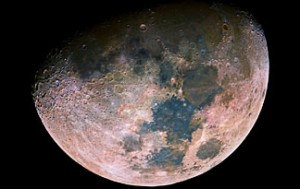


Goodnight, Old Moon

by Sid Perkins


A new analysis of a lunar rock brought back by the 1972 Apollo 16 mission suggests that the moon could be tens of millions of years younger than previously thought. Another possibility, scientists say, is that current models of how the moon cooled in its early years may be totally wrong.


The predominant theory of the moon’s origin holds that a Mars-sized object slammed into Earth soon after the solar system formed about 4.56 billion years ago. After the impact, large volumes of melted material splashed into space, coalesced, and cooled into today’s moon. Previous studies of lunar rocks suggest that the sea of molten rock covering the lunar surface began to solidify anywhere between 4.43 billion and 4.53 billion years ago. But those dates aren’t very precise, largely because the concentrations of the trace elements used in the dating techniques are extremely low, says Lars Borg, a planetary scientist at Lawrence Livermore National Laboratory California. Now Borg and his colleagues have used several methods of radioactive dating to come up with a new—and surprising—date for when the moon’s magma ocean cooled…


For the complete article click here to go to ScienceMag.org.


For the Top Ten Moon Mysteries from DiscoverySpace, click here.

Share
Space Is A Teeming Cesspool Of Life…

The implications of this discovery are staggering. Not only does this imply that the seeds of life are floating all over the not-so-sterile universe, but it’s likely that space is a cesspool of biology… how wonderful!


DNA Meteorites: Life Falling From The Sky

Posted by Robert L. Gidley


DNA meteorites have been confirmed as real by a recent report in the August 9 edition of Proceedings of the National Academy of Sciences. Components of DNA, including nucleobases, have been found in 12 meteorites analyzed using the latest scientific methods.


This was the first study that successfully showed that the nucleobases did not come from contamination. To rule out contamination, the study analyzed the areas where the meteorites came from to rule out possible earthly contamination.


Three of the nucleobases found were also very rare in terrestrial biology,


“Finding nucleobase compounds not typically found in Earth’s biochemistry strongly supports an extraterrestrial origin,” study co-author Jim Cleaves, a chemist at the Carnegie Institution of Washington, told SPACE.com…


For the complete story click here.


For NASA’s take on the discovery watch the video below.


Share

Earth’s Sister Moons

Did our earth once have two moons? And if so, what happened to the other one?


Early Earth May Have Been Orbited By Two Moons

by Nell Greenfieldboyce (NPR.org)


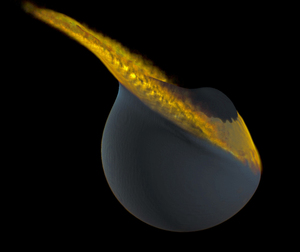
(This artist’s illustration shows a collision between the moon and a companion moon. Scientists say the collision could be responsible for the moon’s asymmetric shape.)


The early Earth had two moons instead of just one — our familiar moon, as well as a smaller companion moon that also rose and set in the sky for tens of millions of years.


That’s according to a new theory that says this smaller moon eventually went careening into our moon and is still there, in the form of mountains on its far side.


Scientists have long puzzled over those mountains, and the fact that the two sides of our moon are very different. The near side has flat lowlands, while the far side is high and mountainous…


For the complete article on NPR, click here.

Share

« Previous PageNext Page »