Archive for the 'Mysterious News' Category

Excited to share! 7 BESTSELLING ebooks for just 99c!

B00FAHESWO


A bundle of books that illuminate the dark, dangerous choices people make when everything that matters is on the line…a whole thrilling bundle of FULL-LENGTH NOVELS all for just $.99.


Till Saturday only – so get it now.


CJ Lyons, Melissa Foster, Russell Blake, Kathleen Shoop, Jenna Bennett, Katia Lief and me –  give you thrilling tales, erotic confessions, spine-tingling twists, smothering fog, family secrets, and unexpected loss all lead to DESPERATE ACTS.


BUY NOW AT THESE RETAILERS:


AMAZON: http://www.amazon.com/dp/B00FAHESWO
KOBO: http://store.kobobooks.com/en-US/ebook/desperate-acts
B&N: http://www.barnesandnoble.com/w/books/1116948113?ean=2940045282314
APPLE: https://itunes.apple.com/us/book/desperate-acts/id711123389?ls=1


Share
The Deathly Sculptures of Lake Natron

Welcome to October, the month of the macabre!


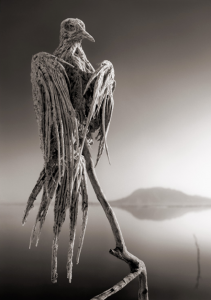
Deadly lake turns animals into statues
by Rowan Hooper


Screen Shot 2013-10-03 at 10.36.58 AM

(Image: Nick Brandt)


“ACCORDING to Dante, the Styx is not just a river but a vast, deathly swamp filling the entire fifth circle of hell. Perhaps the staff of New Scientist will see it when our time comes but, until then, Lake Natron in northern Tanzania does a pretty good job of illustrating Dante’s vision.


Unless you are an alkaline tilapia (Alcolapia alcalica) – an extremophile fish adapted to the harsh conditions – it is not the best place to live. Temperatures in the lake can reach 60 °C, and its alkalinity is between pH 9 and pH 10.5.


The lake takes its name from natron, a naturally occurring compound made mainly of sodium carbonate, with a bit of baking soda (sodium bicarbonate) thrown in. Here, this has come from volcanic ash, accumulated from the Great Rift valley. Animals that become immersed in the water die and are calcified.


Photographer Nick Brandt, who has a long association with east Africa – he directed the video for Michael Jackson’s Earth Song there in 1995 – took a detour from his usual work when he discovered perfectly preserved birds and bats on the shoreline. “I could not help but photograph them,” he says. “No one knows for certain exactly how they die, but it appears that the extreme reflective nature of the lake’s surface confuses them, and like birds crashing into plate glass windows, they crash into the lake.”…


For the rest, and more photos, click here to go to New Scientist.


Share

Prehistoric Wall Paintings In Northern Spain Are 39,000 Thousand Years Old

These are among the earliest known cave paintings produced by humans in Europe. Were the artists modern humans, or were they Neanderthals? Scientists aren’t completely sure…


Whomever the artists were, experts have now been forced to rethink their ideas about the people who lived (and made cave paintings) in the early Upper Palaeolithic – it seems that complex and figurative art was well established much earlier than previously thought.


cave-paintings-among-the-oldest-in-europe


Cave Paintings Among the Oldest in Europe


(Popular Archaeology)


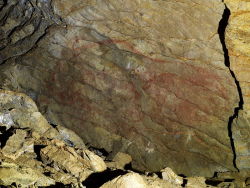
A team of scientists from the Universities of Cantabria and Burgos in Spain and Toulouse in France have dated prehistoric wall paintings in the Altxerri cave system in the Gipuzkoa province of northern Spain to about 39,000 years BPE, making them among the earliest known cave paintings produced by humans in Europe.


It was in 2011 when Cantabria University members Aitor Ruiz and César González began to explore the upper gallery of the cave, designated Altxerri B, with the objective of coming up with some reliable dates for the less-explored wall paintings in this part of the cave system. These paintings appeared to have been done independently of other paintings found in a lower gallery, paintings already with known dates that fell within the 29,000 – 35,000 BPE range. The paintings in this upper gallery were figurative representations of a bison (the most common element among the Altxerri cave system paintings) a feline, a possible animal’s head, a bear and two groups of three finger marks, as well as other motifs. Ruiz and González also employed the help of Diego Garate, a specialist in Upper Paleolithic cave art from the University of Toulouse, to help them place and interpret the paintings and their findings within the context of current knowledge about Paleolithic art in Europe…


For the complete piece click here to go to Popular Archaeology.


Share

« Previous PageNext Page »