Archive for the 'Oddities' Category

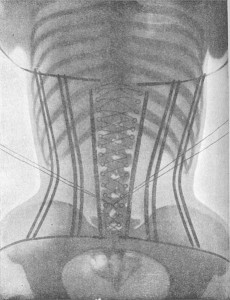
The Amazing Corset X-Rays of 1908

Whilst tempted to feel nostalgic for days long passed, remember that people actually wore these things…


The Corset X-Rays of Dr Ludovic O’Followell (1908)

The Public Domain Review


X-Ray images of women wearing corsets from the second volume of the French doctor Ludovic O’Followell’s Le Corset (1908). Although Dr O’Followell was clearly keen to show the damaging impact of corsets on women’s health, he did not actually want the corset to be abolished, but was simply trying to encourage a less severe design. Dr O’Followell in fact continued to write a regular column for the deluxe corsetier’s magazine Les Dessous Elégance…


461px-Padiographie_du_corsetLigne(dos)

x-ray of a corset


Click here for the rest…


Share

Boy Remembers Past Life – Implicates His Murderer

This is one of those reincarnation stories that is so amazing that it’s hard to believe…


3-Year-Old Remembers Past Life, Identifies Murderer and Location of Body

By Tara MacIsaac, Epoch Times
 

reincarnation-soul-mate


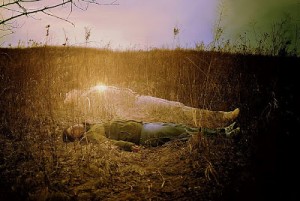
“A 3-year-old boy in the Golan Heights region near the border of Syria and Israel said he was murdered with an axe in his previous life. He showed village elders where the murderer buried his body, and sure enough they found a man’s skeleton there. He also showed the elders where the murder weapon was found, and upon digging, they did indeed found an axe there.


In his book, “Children Who Have Lived Before: Reincarnation Today,” German therapist Trutz Hardo tells this boy’s story, along with other stories of children who seem to remember their past lives with verified accuracy. The boy’s story was witnessed by Dr. Eli Lasch, who is best known for developing the medical system in Gaza as part of an Israeli government operation in the 1960s. Dr. Lasch, who died in 2009, had recounted these astounding events to Hardo.


The boy was of the Druze ethnic group, and in his culture the existence of reincarnation is accepted as fact. His story nonetheless had the power to surprise his community.


He was born with a long, red birthmark on his head. The Druse believe, as some other cultures do, that birthmarks are related to past-life deaths. When the boy was old enough to talk, he told his family he had been killed by a blow to the head with an axe.


It is customary for elders to take a child at the age of 3 to the home of his previous life if he remembers it. The boy knew the village he was from, so they went there…”


For the complete article click here.

Share
Re-examining ‘the Elephant Man’

A mysterious man, a lonely and suffering man, a man who captured our minds and hearts….


Re-examining ‘the Elephant Man’

(The Public Domain Review)


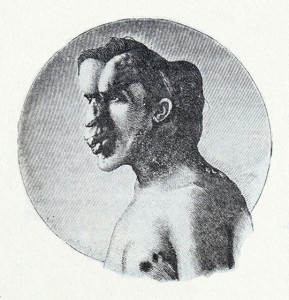
Nadja Durbach questions the extent to which Joseph Merrick, known as the Elephant Man, was exploited during his time in a Victorian ‘freakshow’, and asks if it wasn’t perhaps the medical establishment, often seen as his saviour, who really took advantage of Merrick and his condition.


Image of Joseph Merrick published in the British Medical Journal in 1886

Image of Joseph Merrick published in the British Medical Journal in 1886


“The scenes are among the most heartless in cinema history: a drunken, abusive showman exhibiting the severely deformed Joseph Merrick to horrified punters. David Lynch’s The Elephant Man begins with its lead character being treated little better than an animal in a cage. But it soon finds a clean-cut hero in the ambitious young surgeon Frederick Treves, who rescues the hapless Merrick from his keeper and gives him permanent shelter at the London Hospital. Supported by charitable donations, the victim recovers his humanity: he learns to speak again (in a decidedly middle-class accent), to entertain society guests and to dress and behave like a well-heeled young dandy. Merrick, no more the degraded show freak, reveals his inner goodness and spirituality and dies happy.


Lynch’s movie is based largely on Treves’ sentimental chronicle. But that narrative is merely one version of events – and one that in the end tells us more about middle-class morality than it does about Merrick. There is another story that casts a different light on what happened…


Read the rest here.

Share

« Previous PageNext Page »