Archive for the 'Religion & Spirituality' Category

The Incans and the Egyptians: Connected through time and space?

HAPPY NEW YEAR FROM THE MUSEUM OF MYSTERIES!


And now for some more mysteries…


From gold funeral masks, nearly identical religions, obelisks with hieroglyphics, and so much more, the astounding similarities of the Incan/pre-Incan and Ancient Egyptian cultures is not to be denied. How did two cultures separated in antiquity by a vast ocean co-evolve in so many inexplicable ways? The following article delves into a huge list of coincidences that will no doubt stun you while also convincing you that there simply had to be some sort of connection between these cultures. Was there a seafaring global mother culture such as Atlantis that informed the customs, architecture, and religions of both the Incans and the Egyptians?
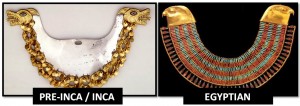
 

Egyptian-Inca-animal-necklaces


The Mystery Of Twin Cultures On Opposite Sides Of The Atlantic


“The ancient Egyptians (in Africa) and the ancient pre-Incas/Incas (in South America) evolved on opposite sides of the globe and were never in contact; yet both cultures mysteriously possessed the same strikingly identical body of ancient art, architecture, symbolism, mythology and religion. The Victorian-era scholars, faced with this enigma, concluded that both cultures must have been children of the same Golden Age parent civilization, “Atlantis.” Today, Egyptian/Inca parallels are not only being ignored by American and Western scholars, they’re being suppressed.


Many baffling and unsolved similarities link the ancient Egyptians and the ancient pre-Incas/Incas – even though both cultures evolved on opposite sides of the planet, separated by oceans.


Victorian-era scholars, faced with this enigma, believed both cultures inherited the same high wisdom from the same exceedingly older source—a shared “parent civilization” now lost to history. For the Victorians this common parent hypothesis explained the parallels well. These Victorian scholars called this common parent “Atlantis,” following Plato and the Classical historians…”


For the rest, click here.


Share
The year’s most mysterious archaeological discoveries

As we prepare to enter the new year, let’s enjoy a fascinating list of ten of the most mysterious archaeological discoveries of 2013…


Ten unusual archaeological discoveries of 2013

(Ancient Origins)


One of the best things about archaeology is uncovering the unexpected. Some of the findings listed below certainly fit into this category – from elongated skulls to vampire graves, green slime, and the DNA of Bigfoot, 2013 has been an eventful year!


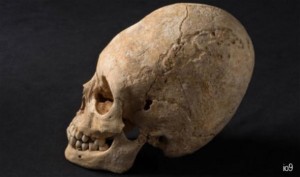
elongated-skull-france


Archaeologists discover mysterious elongated skull in France


French archaeologists made a surprising discovery during an excavation in Alsace, France, when they uncovered a substantially elongated skull dating back 1,500 years.  The finding prompted the archaeologists to extend their search over 7.5 acres, which resulted in the discovery of an abundance of artefacts, human and animal remains from Neolithic, Gallic, Gallo-Roman, and Merovingian societies. The skull appears to have been intentionally elongated through the practice known as cranial deformation, which is usually associated with ancient Mesoamerican cultures and was practiced extensively in Europe, Africa, Asia, and as noted, South America.  The skull was discovered during excavation of a necropolis containing 18 burials, in a tomb belonging to a woman who clearly held a high status position in society as she was buried with a rich assortment of treasures including gold pins, a silver mirror, beads of glass and amber, a comb made from deer antler and a number of other goods.  Cranial deformation was frequently associated with the elites of society and affirmed their high status. The important question of course is why?


See the rest here.

Share

The Nativity Of The Buddha

During this time of year, many people are imagining and reveling in stories of Christ’s nativity. Many of the symbols in our modern day Christmas rituals are based on these stories. So, just imagine how Christians and Christmas celebrators would feel if the exact site of Christ’s birth with remnants of the manger itself had been found?


For Buddhists, this recent archaeological discovery is no doubt a deep one…


 The Earliest Archeology Of Buddha Found

(Science 2.0)


o6s6fPa804tTbF4V


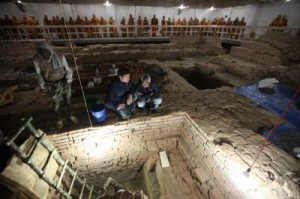
“Archaeologists working in Nepal have uncovered evidence of a structure at the birthplace of the Buddha dating to the sixth century B.C., the first archaeological material linking the life of the Buddha and the movement he founded to a specific century.


The Maya Devi Temple at Lumbini, Nepal, has long been considered the birthplace of the Buddha and now excavations have uncovered the remains of a previously unknown sixth-century B.C. timber structure under a series of brick temples. Laid out on the same design as those above it, the timber structure contains an open space in the center that links to the nativity story of the Buddha himself.


Previously, the earliest archaeological evidence of Buddhist structures at Lumbini dated no earlier than the third century B.C., the time of the patronage of the Emperor Asoka, who promoted the spread of Buddhism from present-day Afghanistan to Bangladesh…”


For the complete story, click here.


Share

« Previous PageNext Page »