
Arctic Tomb of The Female Shaman
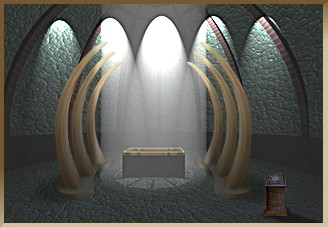
One of the most remarkable recent discoveries is the Ekven cemetery in Chukotka, on the Russian side of the Bering Strait. This 2,000 year old Eskimo cemetery contains the tomb of a female shaman – did you know that the term “shaman” originated in Siberia? (Its meaning in translation from the Evenk language means “excited, frenzied person.”) Many of the artifacts in the tomb are objects that females would have used in healing, rituals, and dance.
William W. Fitzhugh, ed. J. Prusinski (The Arctic Studies Center)
One of the most remarkable discoveries of recent years was the find of a very large cemetery in Chukotka, right on the Russian side of the Bering Strait, called Ekven. This ancient Eskimo cemetery of the Old Bering Sea culture, almost 2,000 years old, had been perfectly preserved in permafrost. When Soviet archaeologists D.A. Sergeev and S.A. Arutiunov came to the site to excavate, among the discoveries they made was Burial 154, a stone, wood, and whalebone tomb, which held the Ekven cemetery’s major find: elaborate burial offerings and the skeleton of an elderly woman with a wooden mask at her knees.
This tomb is reconstructed here showing the original artifacts that were found in that burial, set symbolically within the body of a whale, as reported by Sergeev and Arutiunov.
In terms of arctic archaeology, the Ekven cemetery is probably the most important site; Ipiutak is the only other cemetery site that rivals it. Nearly a hundred graves were excavated, and work is continuing at the site even today by Mikhael Bronstein and colleagues. The fact that these artifacts were found in ceremonial grave contexts gives us a specific chronological marker for each one of these graves. Whereas most of the other Old Bering Sea materials have come from middens, where it is unclear whether the material has been recycled or come from other contexts, here we have burial units that are from one specific time period. Each one can be used to correlate the styles of the tools against the others to develop a highly refined stylistic sequence for this culture.
For the complete article, click here to go to The Hall of Masks at The Arctic Studies Center.
Share

 Newsletter
 Facebook
 Twitter
 Pinterest
 Goodreads