Archive for the 'Science & Research' Category

The Nativity Of The Buddha

During this time of year, many people are imagining and reveling in stories of Christ’s nativity. Many of the symbols in our modern day Christmas rituals are based on these stories. So, just imagine how Christians and Christmas celebrators would feel if the exact site of Christ’s birth with remnants of the manger itself had been found?


For Buddhists, this recent archaeological discovery is no doubt a deep one…


 The Earliest Archeology Of Buddha Found

(Science 2.0)

 

o6s6fPa804tTbF4V


“Archaeologists working in Nepal have uncovered evidence of a structure at the birthplace of the Buddha dating to the sixth century B.C., the first archaeological material linking the life of the Buddha and the movement he founded to a specific century.


The Maya Devi Temple at Lumbini, Nepal, has long been considered the birthplace of the Buddha and now excavations have uncovered the remains of a previously unknown sixth-century B.C. timber structure under a series of brick temples. Laid out on the same design as those above it, the timber structure contains an open space in the center that links to the nativity story of the Buddha himself.


Previously, the earliest archaeological evidence of Buddhist structures at Lumbini dated no earlier than the third century B.C., the time of the patronage of the Emperor Asoka, who promoted the spread of Buddhism from present-day Afghanistan to Bangladesh…”


For the complete story, click here.


Share
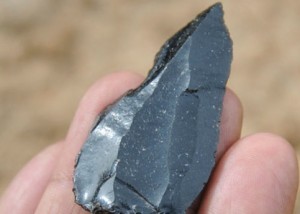
Were homo sapiens making spears thousands of years earlier than we were even thought to exist?

As we’ve been saying for a while now, it seems that humans or our human-like ancestors have been around doing civilized things for a lot longer than mainstream science has lead us to believe. The proof may soon be irrefutable –


dnews-files-2013-11-ancient-spearhead-point-660x440-gallery-jpg


Who Was Throwing Spears Before Humans?

by Jennifer Viegas


“Remains of the oldest known stone-tipped throwing spears, described in a new paper, are so ancient that they actually predate the earliest known fossils for our species by 85,000 years.


There are a couple possible implications, and both are mind-blowing. The first is that our species could be much older than previously thought, which would forever change the existing human family tree.


The second, and more likely at this point, is that a predecessor species to ours was extremely crafty and clever, making sophisticated tools long before Homo sapiens emerged.


Homo heidelbergensis, aka Heidelberg Man, lived in Africa, Europe and western Asia from at least 600,000 years ago. He clearly got around, and many think this species was the direct ancestor of Homo sapiens in Africa and Neanderthals in Europe and Asia.


The new paper, published in the latest PLoS ONE, focuses on the newly identified stone-tipped spears, which date to 280,000 years ago. They were found at an Ethiopian Stone Age site known as Gademotta…”


For the rest, click here to go to Discovery News.

Share

Memory Distortions

Can we trust our own memories?


f34e865a0


How Many of Your Memories Are Fake?


When people with Highly Superior Autobiographical Memory—those who can remember what they ate for breakfast on a specific day 10 years ago—are tested for accuracy, researchers find what goes into false memories.


by Erika Hayasaki, The Atlantic


“One afternoon in February 2011, seven researchers at the University of California, Irvine sat around a long table facing Frank Healy, a bright-eyed 50-year-old visitor from South Jersey, taking turns quizzing him on his extraordinary memory.


Observing from outside of the circle, I tape-recorded the conversation as one researcher tossed out a date at random: December 17, 1999.


“Okay,” Healy replied, “Well, December 17, 1999, the jazz great, Grover Washington Jr., died while playing in a concert.”


“What did you eat that morning for breakfast?”


“Special K for breakfast. Liverwurst and cheese for lunch. And I remember the song ‘You’ve Got Personality’ was playing as on the radio as I pulled up for work,” said Healy, one of 50 confirmed people in the United States with Highly Superior Autobiographical Memory, an uncanny ability to remember dates and events. “I remember walking in to work, and one of the clients was singing a parody to Jingle Bells, ‘Oh, what fun it is to ride in a beat up Chevrolet.’”


These are the kinds of specific details that writers of memoir, history, and journalism yearn for when combing through memories to tell true stories. But such work has always come with the caveat that human memory is fallible. Now, scientists have an idea of just how unreliable it actually can be. New research released this week has found that even people with phenomenal memory are susceptible to having “false memories,” suggesting that “memory distortions are basic and widespread in humans, and it may be unlikely that anyone is immune,” according to the authors of the study published in Proceedings of the National Academy of Sciences (PNAS)…”


For the complete article click here.

Share

« Previous PageNext Page »