Archive for the 'Mysterious History' Category

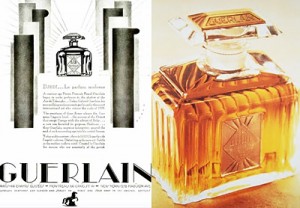
Lost Fragrances Continued: M.J. Guest Blogs About GUERLAIN…

Curious about what lost perfumes were like? Author M.J. Rose spent a few months touring the blogosphere last year, and she left behind a gorgeous trail of guest posts about lost fragrances…


Now that the paperback of THE BOOK OF LOST FRAGRANCES is out, we are publishing her guest posts here at The Museum of Mysteries. Enjoy! (Tune in often as we post more links to her numerous delicious posts. Your senses will thank you!)


…And so, here’s a peek at M.J.’s lush Guest Post at Mystery Fanfare on GUERLAIN


“Researching The Book of Lost Fragrances was a labor of love. One of the most wonderful parts was working with a famous blogger, Dimi of The Sorcery of Scent. He helped me find out about fragrances that have been lost to us and what they smelled like. 


I thought it would interesting for us to tell you about one of them.


Guerlain first focused on verveine (verbena) varieties to use in perfumes in the mid-late 1800’s. Eau de Verveine was released first in the 1870’s and made brief reappearances in the 1950s and the 1980s before being retired from Guerlain’s perfume portfolio. Eau de Verveine is the scent of high summer… sharp, uplifting notes of citrus-green lemon verbena flood the mouth with saliva with their crisp, energising aroma….”


For her complete post about GUERLAIN click here.


Share

The dark downfall of Eleanor Cobham…

The Penance of Eleanor, painted in 1900


The Duchess and the Necromancers


By Nancy Bilyeau


“On Monday, November 19th, 1441, the people of London lined the streets to observe an act of public penance. That morning a woman, perhaps forty years of age, bare-headed, plainly dressed, was rowed in a barge to Temple Stairs off the Thames. She stepped off the barge and proceeded to walk all the way to St. Paul’s Cathedral, carrying before her a wax taper of two pounds. Once she made it to St. Paul’s, she offered the taper to the High Altar.


The woman was Eleanor Cobham, mistress-turned-wife to Humphrey, Duke of Gloucester, only surviving uncle to the childless Henry VI and thus the heir to the throne. The duchess had been tried and condemned for heresy and witchcraft. This was the first of three days of ordered pilgrimages to churches, showing a “meke and a demure countenance.” Afterward, she would be forced to separate from her husband and live in genteel prison for the rest of her life….”


For the rest, click here.


Share

Cut off from the world, a family survives for decades in the wilds of Siberia…

This is a beautiful and heartbreaking story. Fascinating beyond imagination. A story that would make a most interesting and eye-catching film – Who wants to write the screenplay?


For 40 Years, This Russian Family Was Cut Off From All Human Contact, Unaware of World War II


In 1978, Soviet geologists prospecting in the wilds of Siberia discovered a family of six, lost in the taiga


“Siberian summers do not last long. The snows linger into May, and the cold weather returns again during September, freezing the taiga into a still life awesome in its desolation: endless miles of straggly pine and birch forests scattered with sleeping bears and hungry wolves; steep-sided mountains; white-water rivers that pour in torrents through the valleys; a hundred thousand icy bogs. This forest is the last and greatest of Earth’s wildernesses. It stretches from the furthest tip of Russia’s arctic regions as far south as Mongolia, and east from the Urals to the Pacific: five million square miles of nothingness, with a population, outside a handful of towns, that amounts to only a few thousand people.


When the warm days do arrive, though, the taiga blooms, and for a few short months it can seem almost welcoming. It is then that man can see most clearly into this hidden world—not on land, for the taiga can swallow whole armies of explorers, but from the air…”


Read more here.
Follow: @SmithsonianMag on Twitter

Share

« Previous PageNext Page »