Ancient Apocalypse: Zombies and Plagues

A plague so horrible that the dead were disposed of in unusual or violent ways is not just the stuff of zombie movies. Newly unearthed remains at Luxor in Egypt reveal an ancient plague so potent that religious burial rites were completely overlooked before the bodies were incinerated or buried under lime. “We found evidence of corpses either burned or buried inside the lime…They had to dispose of them without losing any time…”
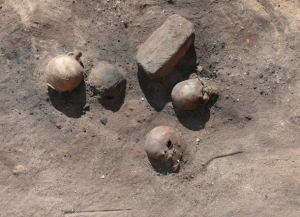
 

Here, a bonfire where many of the victims of an ancient epidemic in the ancient city of Thebes in Egypt were ultimately incinerated.
Credit: Photo by N. Cijan © Associazione Culturale per lo Studio dell’Egitto e del Sudan ONLUS.


Remains of ‘End of the World’ Epidemic Found in Ancient Egypt

By Owen Jarus, Live Science Contributor


“Archaeologists have uncovered the remains of an epidemic in Egypt so terrible that one ancient writer believed the world was coming to an end.


Working at the Funerary Complex of Harwa and Akhimenru in the west bank of the ancient city of Thebes (modern-day Luxor) in Egypt, the team of the Italian Archaeological Mission to Luxor (MAIL) found bodies covered with a thick layer of lime (historically used as a disinfectant). The researchers also found three kilns where the lime was produced, as well as a giant bonfire containing human remains, where many of the plague victims were incinerated.


Pottery remains found in the kilns allowed researchers to date the grisly operation to the third century A.D., a time when a series of epidemics now dubbed the “Plague of Cyprian” ravaged the Roman Empire, which included Egypt. Saint Cyprian was a bishop of Carthage (a city in Tunisia) who described the plague as signaling the end of the world. [See Photos here of the Remains of Plague Victims & Thebes Site]”…


For the rest, click here.

Share
Re-examining “the Elephant Man”…


There is another account of Joseph Merrick’s life that suggests he may have been better off if he had stayed in the freakshow, living out his days as one of the most respected showmen of his day. The memoirs of Tom Norman, Merrick’s London manager are most certainly biased, but his version presents a compelling challenge to the more widely-known claim that Merrick was better off in the hospital.


Was the exploitation of Merrick by the well-heeled society folks of his day just another type of freakshow? Possibly one in which Merrick was debased even more than he was in his former life as a respected sideshow entertainer? It’s an interesting question, and one that we here at the Museum find incredibly fascinating. I think that many of us probably share a deep sympathy for Joseph Merrick — a man with what seemed like an artist’s sensitivity and a beautiful heart and mind.


9347850541_911d70c38c_o

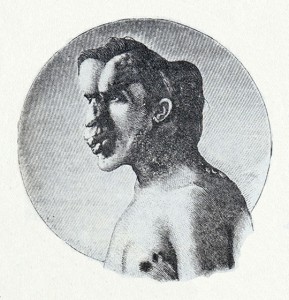
Image of Joseph Merrick published in the British Medical Journal in 1886.


Re-examining ‘the Elephant Man’ (The Public Domain Review)


Nadja Durbach questions the extent to which Joseph Merrick, known as the Elephant Man, was exploited during his time in a Victorian ‘freakshow’, and asks if it wasn’t perhaps the medical establishment, often seen as his saviour, who really took advantage of Merrick and his condition.


“The scenes are among the most heartless in cinema history: a drunken, abusive showman exhibiting the severely deformed Joseph Merrick to horrified punters. David Lynch’s The Elephant Man begins with its lead character being treated little better than an animal in a cage. But it soon finds a clean-cut hero in the ambitious young surgeon Frederick Treves, who rescues the hapless Merrick from his keeper and gives him permanent shelter at the London Hospital. Supported by charitable donations, the victim recovers his humanity: he learns to speak again (in a decidedly middle-class accent), to entertain society guests and to dress and behave like a well-heeled young dandy. Merrick, no more the degraded show freak, reveals his inner goodness and spirituality and dies happy.


Lynch’s movie is based largely on Treves’ sentimental chronicle. But that narrative is merely one version of events – and one that in the end tells us more about middle-class morality than it does about Merrick. There is another story that casts a different light on what happened. The memoirs of Tom Norman, Merrick’s London manager, are surely as biased as Treves’. But as one of the most respected showmen of his day, Norman’s account challenges head on Treves’ claim that Merrick was ultimately better off in the hospital than at the freakshow…”


See the rest here.

Share

Electronic makeup. The sci-fi future of beauty?

Creepy or beautiful? Projected “makeup” may or may not translate into actual beauty techniques of the future, but this is a compelling example of the body as a canvas…


(From Gizmodo)


“Nobumichi Asai has used projection mapping to put CGI onto cars, docks, building and more. His latest canvas? A real, live human face.


Asai used Omote, a combination of real-time face tracking and projection mapping to transform a model’s face into mesmerizing patterns. Slash Gear calls it “electronic makeup”, but as you will see in the (creepy-ish) video, it goes much, much beyond anything makeup can possibly do…”


OMOTE / REAL-TIME FACE TRACKING & PROJECTION MAPPING.

OMOTE / REAL-TIME FACE TRACKING & PROJECTION MAPPING. from something wonderful on Vimeo.

Share

« Previous PageNext Page »