The Case of Google’s Multilingual Translation System Suddenly Inventing Its Own Language…

Who knows, maybe the A.I. that eventually takes over humanity will turn out to be nicer than we are?



From FreeCodeCamp,


The mind-blowing AI announcement from Google that you probably missed.


“In the closing weeks of 2016, Google published an article that quietly sailed under most people’s radars. Which is a shame, because it may just be the most astonishing article about machine learning that I read last year.


Don’t feel bad if you missed it. Not only was the article competing with the pre-Christmas rush that most of us were navigating?—?it was also tucked away on Google’s Research Blog, beneath the geektastic headline Zero-Shot Translation with Google’s Multilingual Neural Machine Translation System.


This doesn’t exactly scream must read, does it? Especially when you’ve got projects to wind up, gifts to buy, and family feuds to be resolved?—?all while the advent calendar relentlessly counts down the days until Christmas like some kind of chocolate-filled Yuletide doomsday clock.


Luckily, I’m here to bring you up to speed. Here’s the deal.


Up until September of last year, Google Translate used phrase-based translation. It basically did the same thing you and I do when we look up key words and phrases in our Lonely Planet language guides. It’s effective enough, and blisteringly fast compared to awkwardly thumbing your way through a bunch of pages looking for the French equivalent of “please bring me all of your cheese and don’t stop until I fall over.” But it lacks nuance.


Phrase-based translation is a blunt instrument. It does the job well enough to get by. But mapping roughly equivalent words and phrases without an understanding of linguistic structures can only produce crude results.


This approach is also limited by the extent of an available vocabulary. Phrase-based translation has no capacity to make educated guesses at words it doesn’t recognize, and can’t learn from new input.


All that changed in September, when Google gave their translation tool a new engine: the Google Neural Machine Translation system (GNMT). This new engine comes fully loaded with all the hot 2016 buzzwords, like neural network and machine learning.


The short version is that Google Translate got smart….”


For the rest, click here.


Share
The Stone Age Atlantis of Britain

It’s funny how we are skeptical of “sunken” continents such as Atlantis when there are places like Doggerland…


From Ancient Origins,


7,000-Year-Old Forest and Footprints Uncovered in the Atlantis of Britain


“Ancient footprints as well as prehistoric tree stumps and logs have become visible along a 200-meter stretch of a coastline at Low Hauxley near Amble, Northumberland, in what is believed to be Doggerland, the Atlantis of Britain.


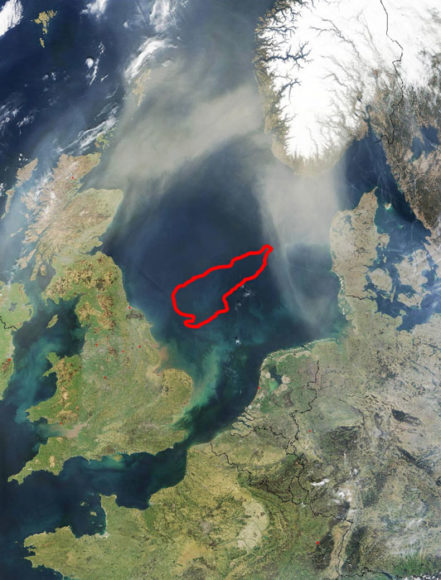
The Daily Mail reports that the forest existed in the late Mesolithic period. It began to form around 5,300 BC, and it was covered by the ocean three centuries later. The studies proved that at the time, when the ancient forest existed, the sea level was much lower. It was a period when Britain had recently separated from the land of what is currently Denmark. The forest consisted mostly of hazel, alder, and oak trees. Researchers believe the forest was part of Doggerland, an ancient stretch of a land, which connected the UK and Europe.


Doggerland: Stone Age Atlantis of Britain


Located in the North Sea, Doggerland is believed to have once measured approximately 100,000 square miles (258998 square kilometers). However, the end of the Ice Age saw a great rise in the sea level and an increase in storms and flooding in the region, causing Doggerland to gradually shrink…”


For the rest, and a video, click here.

Share

Hop in – The Egyptian portal in the Andes…

Happy New Year all of our dear friends at the Museum. We are so grateful for your readership and participation, and we hope to share many more mysterious moments with you in 2017. Cheers to the future!


From Ancient Origins,


Naupa Iglesia: An Egyptian Portal in the Andes?


(…Hey! Maybe it’s a portal out of 2016! Beam us over!)


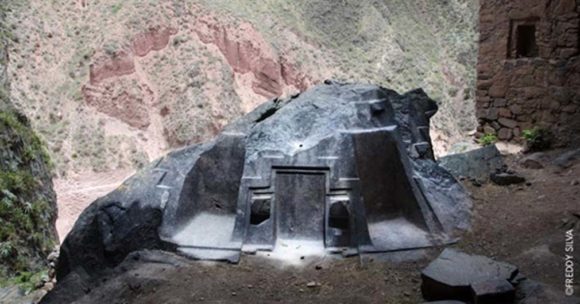
“Halfway up a near-vertical ravine in the Andes, someone carved an inverted V-shaped entrance into the mountainside. Then they sliced the bedrock with great precision to create a shallow door that goes nowhere; the same design appears in ancient Persia and Egypt. Then for good measure, they carved an additional altar with three alcoves into an outcrop of bluestone.


This sacred site is named Naupa Iglesia, or more accurately, Naupa Huaca.


Windows into Paradise
It’s not by accident such ‘doors’ are referred to as spirit doors or windows into paradise: a naupa is an inhabitant of the spirit world, and as it happens, the false door of Naupa Huaca marks the passage of the earth’s electromagnetic currents, the very forces that are known to generate out-of-body states.


It takes a hard heart to stand here and not feel the palpable energy of place. It is transfixing as much as it is bewitching. And perhaps that is the foremost reason why this site was carved in such a remote and inaccessible location in Peru. The very nature of its location makes any astronomical relationship unlikely, so we are open to entertain the idea that this temple was used for a restricted shamanic ritual. Temples of a similar nature in other parts of the world typically require a difficult access, followed by a sensory deprived environment which generates conditions for the candidate to access other levels of reality…”


For the rest, and some incredible photographs, click here.


Share

« Previous PageNext Page »