Some bread for your sins…

The poor were so hungry they were willing to trade their souls for some sin-soaked bread.
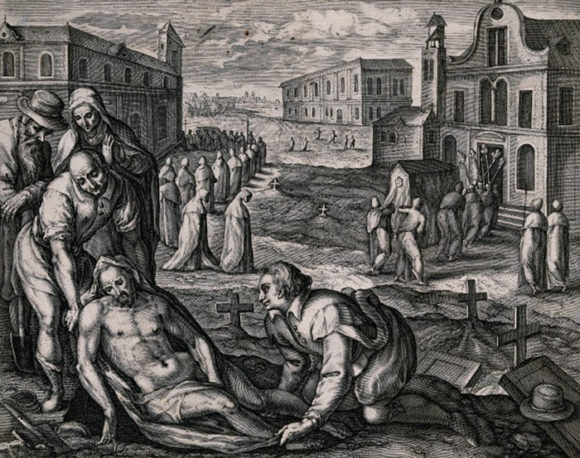


The Worst Paid Freelance Gig in History Was Being the Village Sin Eater
Sin eaters risked their souls to soak up the sins of the dead.
by Natalie Zarrelli November


“When a loved one died in parts of England, Scotland, or Wales in the 18th and 19th centuries, the family would grieve, place bread on the chest of the deceased, and call for a man to sit in front of the body. The family of the deceased watched on as this man, the local professional sin eater, absorbed the sins of the departed’s soul.


The family who hired the sin eater believed that the bread literally soaked up their loved one’s sins; once it was eaten, all the misdeeds were passed on to the hired hand. Once the process was complete, the sin eater’s own soul was heavy with the ill deeds of countless men and women from his village or town.


The sin eater paid a high price to help others drift smoothly into the afterlife: the coin he was given was worth a mere four English pence, the equivalent of a few U.S. dollars today. Usually, the only people who would dare risk their immortal being during such a religious era were the very poor, whose desire for a little bread and drink carried them along….”


For the rest, click here.

Share
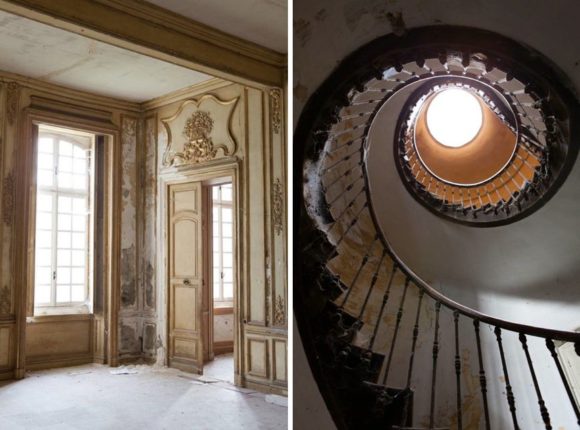

Renovating a decaying Neoclassical French Chateau

This is our new fantasy lifestyle…


chateauren2 chateausnow


From The Vintage News,

Australian couple Bought a decaying Neoclassical French Chateau and started blogging the restoration process


“Renovating a decaying neoclassical French Chateau is the ultimate dream, right? – Just the mere visit in a once sumptuous, now eerie palace lived by French aristocrats, where every corner has its intriguing story, gives me goosebumps. So bringing back the glory to a crumbling, massive palace, makes the 94 room Chateau de Gudanes, Mount Everest of renovating. So, Australian couple Karina and Craig Waters in 2011 decided to “climb the summit” i.e to revive the 18th-century ruin as soon as they saw the abandoned beauty mansion in the Midi-Pyrénées online, that had been sitting on the market for four years.


Karina Waters, a former corporate and tax accountant lived with her husband Craig, a surgeon and their two children in Perth, Western Australia. In 2011, they’ve decided to buy a house in France, and they had almost given up the exhausting hunt, when the couple’s 16-year-old son, Ben, spotted the forgotten property on the internet.


The Australian couple immediately flew to Paris and drove 700km to view the enchanted mansion, and at the first glance they have found their calling: ” to bring this decaying beauty to life.”…


For the rest, click here. For the restoration blog, click here.


Share

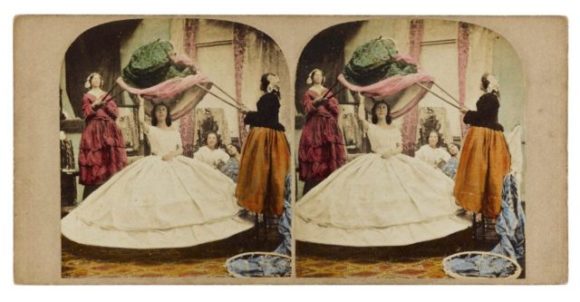
The Deadly Crinoline: A Victorian History of Death by Fashion

The best new vocabularly word we’ve learned in a while: “Crinolinemania” —


colored-stereocard-depicting-a-man-discovered-under-a-ladies-crinoline-by-an-unknown-photographer-640x333


From The Vintage News,

Crinolinemania: The dangerous Victorian fashion garment that killed around 3,000 women


“The crinoline was perceived as a signifier of social identity, with a popular subject for cartoons being that of maids wearing crinolines like their mistresses, much to the higher-class ladies’ disapproval.
Unlike the farthingales and panniers, the crinoline was worn by women of every social class; and the fashion swiftly became the subject of intense scrutiny in Western media.


The questions of servants in crinoline and the related social concerns were raised by George Routledge in an etiquette manual published in 1875, where he criticised London housemaids for wearing hoops at work.


As the girls knelt to scrub the doorsteps, Routledge described how their hoops rose to expose their lower bodies, inspiring street harassment from errand boys and other male passers-by.


Routledge firmly opined that servants ought to save their fashionable garments for their leisure periods, and dress appropriately for their work.


However, this was challenged by some servants who saw attempts to control their dress as equivalent to controlling their liberty, and refused to work for employers who tried to forbid crinolines…”


For the rest, click here.

Share

« Previous PageNext Page »