Who made the oldest stone tools on record?

Civilization is very, very ancient indeed. But did it start with humans, or someone much older?


Oldest stone tools raise questions about their creators
The 3.3-million-year-old implements predate the first members of the Homo genus.
by Ewen Callaway (Nature)
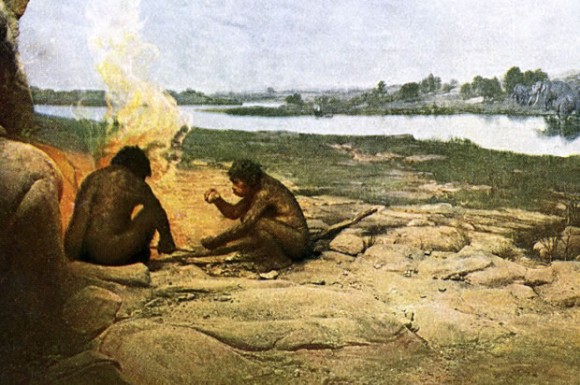


“The oldest stone tools on record may spell the end for the theory that complex toolmaking began with the genus Homo, to which humans belong. The 3.3-million-year-old artefacts, revealed at a conference in California last week, predate the first members of Homo, and suggest that more-ancient hominin ancestors had the intelligence and dexterity to craft sophisticated tools.


“This is a landmark discovery pertaining to one of the key evolutionary milestones,” says Zeresenay Alemseged, a palaeoanthropologist at the California Academy of Sciences in San Francisco, who attended the talk at the annual meeting of the Paleoanthropology Society in San Francisco, on 14 April.


More than 80 years ago, anthropologist Louis Leakey found stone tools in Olduvai Gorge in Tanzania. Decades later, he and his wife Mary and their team found bones from a species that the Leakeys named Homo habilis — ‘the handy man’. This led to the prevailing view that human stone-tool use began with Homo, a group that includes modern humans and their big-brained and tall forebears. The oldest of these Oldowan tools date to 2.6 million years ago — around the time of the earliest Homo fossils. Climate upheavals that transformed dense forest into open savannah might have catalysed ancient humans into developing the new technology so that they could hunt or scavenge grass-eating animals, the theory goes…”


For the rest, click here to go to Nature.

Share

New Scientific Study of Near Death Experience…


We have a close friend who experienced an NDE — his account is so sincere and so vivid, there is no doubt in our minds that this phenomenon exists…


First hint of ‘life after death’ in biggest ever scientific study

By Sarah Knapton, Science Correspondent


Southampton University scientists have found evidence that awareness can continue for at least several minutes after clinical death which was previously thought impossible


“Death is a depressingly inevitable consequence of life, but now scientists believe they may have found some light at the end of the tunnel.


The largest ever medical study into near-death and out-of-body experiences has discovered that some awareness may continue even after the brain has shut down completely.


It is a controversial subject which has, until recently, been treated with widespread scepticism.


But scientists at the University of Southampton have spent four years examining more than 2,000 people who suffered cardiac arrests at 15 hospitals in the UK, US and Austria.


And they found that nearly 40 per cent of people who survived described some kind of ‘awareness’ during the time when they were clinically dead before their hearts were restarted…”


Click here for the rest.

Share

Maurice Sendak Illustrates the Brothers Grimm

Oh my! We love these so very much…

Enjoy.


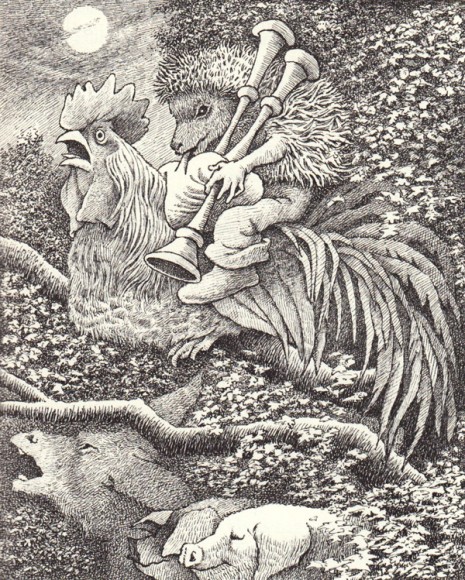
mauricesendak_junipertree_grimm11


Where the Wild Things Really Are: Maurice Sendak Illustrates the Fairy Tales of the Brothers Grimm
by Maria Popova (Brain Pickings)


“A dialogue in darkness and light across two centuries of magic and genius.


It is always an immeasurable delight when a beloved artist reimagines a beloved children’s book — take, for instance, the various illustrations for Alice in Wonderland and The Hobbit from the past century — but I have a special soft spot for reimaginings of the Brothers Grimm fairy tales, which remain among humanity’s most exquisite and enduring storytelling. The roster of notable interpretations is lengthy and impressive — including Lorenzo Mattotti for a retelling by Neil Gaiman, Andrea Dezsö for the little-known original edition of the tales, Edward Gorey for three of the best-known ones, David Hockney for an unusual vintage edition, and Wanda Gág’s seminal early-twentieth-century illustrations. But the most bewitching Grimm interpreter of all is Maurice Sendak (June 10, 1928–May 8, 2012)…”


For the rest click here.

Share

« Previous PageNext Page »